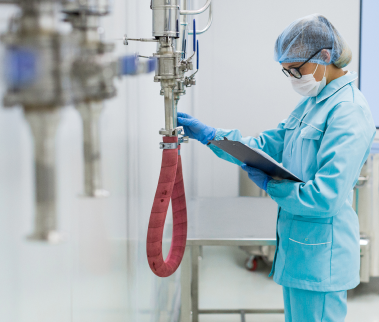


Mastering vaccine production technologies, especially new ones, helps Vietnam ensure vaccine security, disease prevention, and equitable vaccine access during pandemics.
New technologies in pharmaceutical and medical equipment production
This afternoon, Nov 30, the Minister of Health Dao Hong Lan and the Minister of Science and Technology Huynh Thanh Dat co-chaired a meeting between the two ministries to strengthen coordination in scientific, technological management, and innovation in the health sector.
During the meeting, the Minister of Health stated that health scientists and doctors have achieved many results in research and scientific application in diagnosis, treatment, and production of vaccines, medicines, and medical materials.
In diagnosis and treatment, Vietnam has basically acquired, mastered, and implemented results equivalent to advanced countries in many specialties, recognized by major domestic awards like the Ho Chi Minh Prize clusters; domestic vaccine production research ensuring the supply for the expanded immunization program with 11 of 12 vaccine types.
Vietnam has received and mastered several technologies for researching and producing protein- and enzyme-based medicines; discovering and applying biomarkers related to cancer and genetic diseases; and achieving results in applying cell technology for the conservation and development of rare medicinal resources.
Informing about access to new technologies, Prof. Dr. Nguyen Dang Hien, Director of Polyvac, Ministry of Health, stated that Vietnam is one of the countries selected by WHO for mRNA vaccine production technology transfer. Polyvac is the point of contact to receive this technology. Next week, a WHO expert delegation will arrive in Vietnam to work at Polyvac to discuss related issues.
Vietnam is a developing country but has had decades of experience in vaccine development. Vietnam's National Regulatory Authority (NRA) for vaccines has also been recognized by WHO.
mRNA technology is an advanced technology that allows for updating variants and large-scale production, thus being significant not only in COVID-19 prevention but also in actively responding to other future pandemics.
Vietnam is 1 of 7 countries selected by WHO for phase 3 clinical trials of tuberculosis vaccine. This is also an opportunity to leverage Vietnam's strengths in clinical trials; citizens will have the chance to access the new vaccine once it qualifies for wide administration.
Hoping for more international standard laboratories
During the meeting, scientists expressed their desire for investment in biosafety level 3 laboratories. Currently, 2/3 of these labs belong to two Ministry of Health research units, but recent maintenance and efficacy investment has been limited. Vietnam lacks a biosafety level 4 lab, which is a disadvantage for scientists implementing research requiring strict conditions, while medicine has many areas needing it.
Receiving ideas, the Minister of Science and Technology highly appreciated medical scientific research, as the health sector has many technological applications to improve diagnosis, treatment, and healthcare quality for the people.
Mastering vaccine technology by the health sector contributes to ensuring vaccine security and disease prevention, especially during pandemics.
The Ministry of Science and Technology and the Ministry of Health will cooperate more closely and effectively in approving, implementing, and applying medical scientific research; proposing and resolving obstacles in the scientific research project approval process, thereby motivating scientists and doctors to participate in research and apply medical research achievements.