

A study shows children receiving the measles, mumps, and rubella (MMR) vaccine do not have an increased risk of autism.
According to Live Science, the results published on March 4 in Annals of Internal Medicine are part of one of the largest studies denying the link between autism and the MMR vaccine.
To reach this conclusion, Danish scientists analyzed data from over 657,000 people born between 1999 and 2010, including 6,500 diagnosed with autism spectrum disorder.
The results showed no link between vaccines and autism, even in high-risk groups. Notably, the rate of autism in kids vaccinated between 1999 and 2000 was lower than in unvaccinated kids.
"Caregivers should not refuse vaccination due to this baseless link between the MMR vaccine and autism," emphasized Anders Hviid from the Statens Serum Institute.
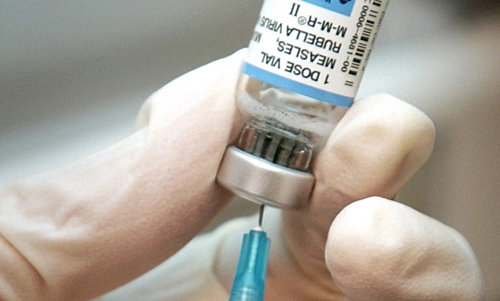
The idea that MMR vaccines are linked to autism originated from a small 1998 study by Andrew Wakefield in The Lancet, which examined 12 children with development delays, eight of whom had autism.
Lacking scientific basis, Wakefield's study was retracted by The Lancet, and the author lost his medical license. Scientists still criticize it as the "most damaging medical hoax of the last 100 years."
Since 1998, numerous studies have confirmed MMR vaccines are unrelated to autism, including a 2002 study on 537,000 individuals in Denmark.
To date, science has not identified a biological cause for autism. However, some higher-risk groups include boys, children born 2008-2010, unvaccinated children, and those with autistic siblings. Other factors include older parents, low birth weight, premature birth, and maternal smoking.