

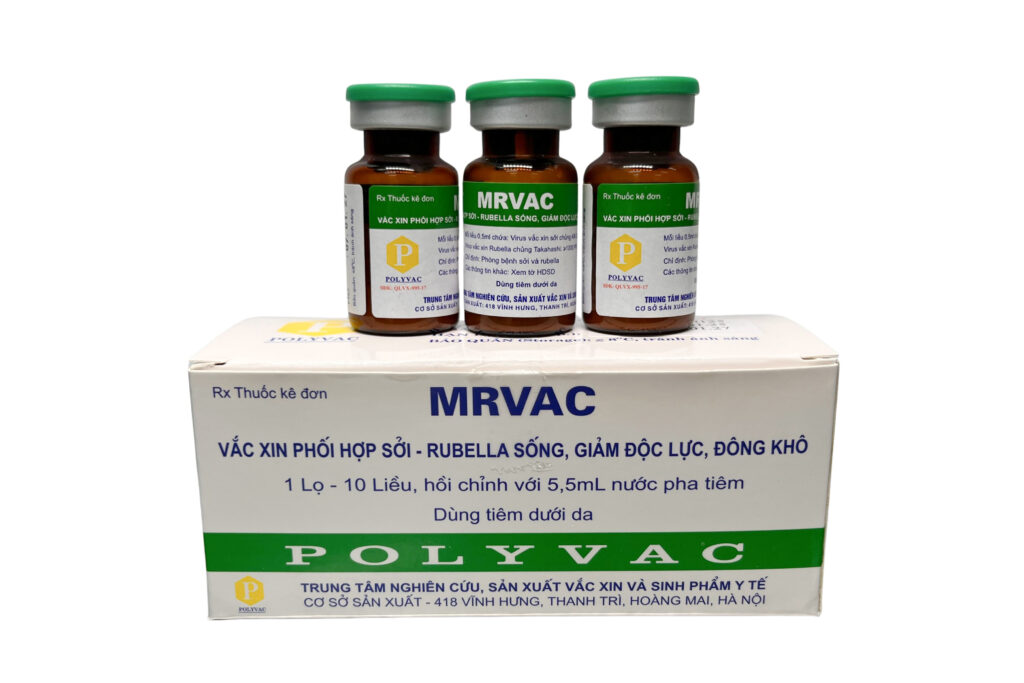
What is Measles - Rubella Combined Vaccine MRVAC?
MRVAC vaccine is a combined vaccine consisting of live attenuated measles virus (AIK-C strain) produced on primary SPF chicken embryo cells and live attenuated rubella virus (Takahashi strain) produced on primary SPF rabbit kidney cells.
This is an opaque white lyophilized product produced on a modern technology line, meeting World Health Organization standards for injectable Measles-Rubella combined vaccines. Before use, it must be reconstituted with the provided water for injection.
- Measles Virus AIK-C strain: ≥1000 PFU
- Rubella virus Takahashi strain: ≥1000 PFU
- Dosage: 0.5ml/dose
- Target group: From 12 months of age and older
- Route of injection: Subcutaneous (do not inject intravenously)
- Dosage form: Opaque white lyophilized powder
- Antibiotics: Erythromycin and Kanamycin (≤12.5μg)
- Storage: ≤8°C, shelf life 24 months
- Contraception: 2 months post-vaccination
- Contraindications: Pregnant women, immunodeficiency
Product Information
This section provides detailed information on ingredients, dosage, administration, indications, and important considerations when using Measles-Rubella combined vaccine MRVAC. You will find complete instructions on storage, contraindications, adverse reactions, and necessary warnings to ensure safety and efficacy during immunization.
Each 0.5mL dose contains:
| Ingredients | Dose |
|---|---|
| Live attenuated Measles virus, AIK-C strain | ≥1000 PFU |
| Live attenuated rubella virus Takahashi strain | ≥1000 PFU |
| Stabilizer: | |
| Lactose | 2% |
| D-Sorbitol | 0,72% |
| L-Sodium glutamate | 0,4% |
| Hydrolized Gelatin | 0,36% |
| Antibiotic: | |
| Antibiotic: Erythromycin | ≤ 12.5μg |
| Kanamycin | ≤ 12.5μg |
Lyophilized powder for injection.
The vaccine is indicated for active immunization against measles and rubella for subjects aged 12 months and older.
In case of hypersensitivity to any component of the vaccine.
Pregnant women.
In case of acute respiratory infection, progressive untreated tuberculosis or immunodeficiency.
People with malignant diseases.
Injection route: The vaccine is only for subcutaneous injection. Do not inject intravenously.
Injection dose: 0.5ml/dose.
Expanded Immunization Schedule: Vaccinate subjects from 12 months of age and older.
Injection method:
- When reconstituting the vaccine, the vial stopper and surrounding area must be disinfected with alcohol.
- Use a 10ml syringe to draw 5.5ml of water for injection, inject into the vaccine vial, and shake well until the vaccine is completely dissolved.
- Visually inspect to ensure the vaccine solution is clear and free from debris, turbidity, or foreign matter.
- Use a 1ml syringe to draw 0.5 ml of vaccine to inject 1 dose subcutaneously.
- The usual injection site is the outer surface of the upper arm, which must be disinfected with alcohol before injection.
- During the procedure, maintain equipment sterility and change the needle and syringe for each individual.
- After use, syringes and vaccine vials must be collected in medical waste bins and treated according to regulations for medical waste.
Caution should be exercised in cases with a history of high fever, allergy, convulsions, brain damage, thrombocytopenia.
Caution should be exercised for cases with underlying conditions such as cardiovascular disease, kidney disease, liver disease, blood disorders, developmental disorders..., those previously considered to have incomplete immunity, or cases with relatives suffering from congenital immunodeficiency.
Vaccination should be postponed in case of fever or treatments affecting the immune system (such as medication, blood transfusion, or blood products). Only vaccinate the child at least 3 days after the fever has subsided and at least 6 weeks after treatments affecting the immune system have ended.
Note to avoid pregnancy within 02 months after vaccination.
Possible side effects include pain, swelling, and redness at the injection site. These are usually mild and resolve within 1-4 days.
Systemic reactions such as fever, fatigue, malaise, fussiness, cough, sore throat, runny nose, and diarrhea may also occur in some children, typically lasting 1 to 3 days and resolving without treatment.
Cases of seizures, respiratory failure, hypotension, bronchial edema, encephalitis, or thrombocytopenia are very rare (incidence rate ≤ 1/1,000,000).
Report to your doctor any adverse reactions encountered when using the vaccine.
There is no evidence of the vaccine's effect on the ability to drive or operate machinery.